 Skip to content
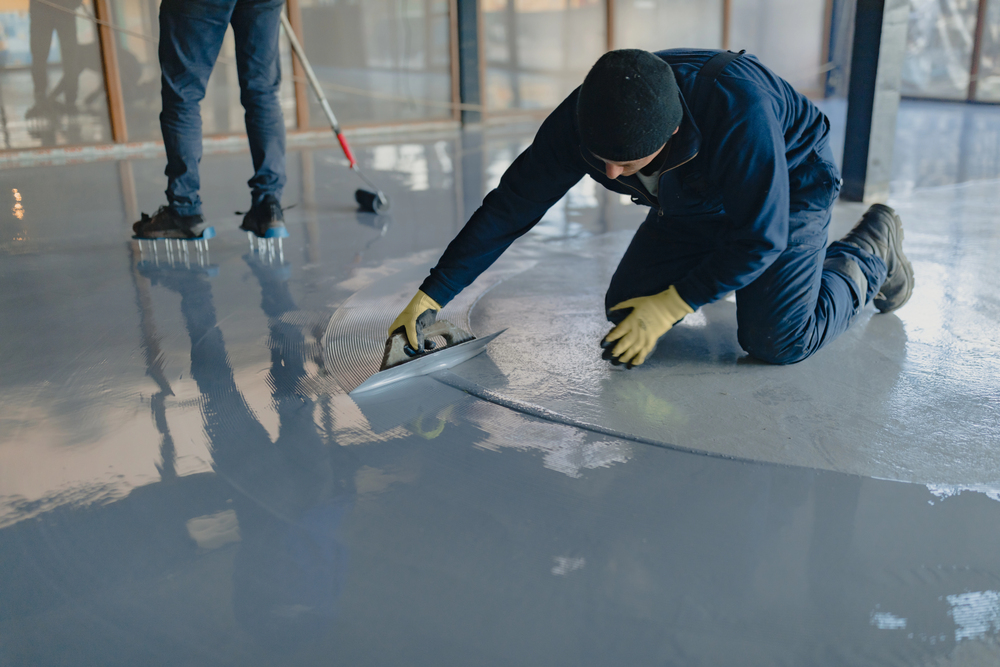
When choosing the best flooring for your home or business, the decision often comes down to durability, aesthetics, and functionality. Two popular options that frequently come up in these discussions are resin flooring and epoxy flooring.
Both offer long-lasting results, but how do they compare in terms of performance, cost, and application? In this comparison of resin flooring vs. epoxy flooring, we’ll look at the differences between the two, helping you decide which option is best suited to your needs.
At Elite Flooring Solutions, LLC, we specialize in both residential concrete coatings and commercial flooring solutions. Our goal is to provide you with the highest quality options, ensuring your space is both functional and aesthetically pleasing.
What Is Epoxy Flooring?
Epoxy flooring, often referred to as epoxy resin flooring, is a type of flooring system made from a mixture of resin and hardener. When combined, these components chemically bond to create a strong, durable surface that’s resistant to stains, chemicals, moisture, and physical wear.
Epoxy resin coating forms a seamless surface that is ideal for spaces with heavy foot traffic or areas that need to withstand impact and harsh conditions.
Epoxy flooring is widely used in industrial spaces, garages, commercial environments, and even some residential areas. The appeal lies in its strength, versatility, and aesthetic options. Epoxy coatings can be applied in a range of finishes, from glossy to matte, and they can also be customized with colors, textures, and even decorative elements.
What Is Resin Flooring?
Resin flooring refers to a broader range of flooring solutions that use synthetic resins as a base. This includes materials like polyurethane, acrylic, and, of course, epoxy.
Resin flooring is often categorized by the type of resin used, which gives each variant distinct characteristics. For example, polyurethane resin flooring offers greater flexibility and is more resistant to wear and tear than epoxy resin flooring, making it ideal for spaces that experience constant movement or heavy machinery.
Key Differences Between Resin Flooring and Epoxy Flooring
While both flooring solutions offer considerable protection and durability, there are several factors that set resin flooring and epoxy flooring apart. Here’s a look at some of the key differences.
Composition and Flexibility
Epoxy flooring is primarily a mixture of epoxy resins and hardeners that form a rigid, durable surface. This makes epoxy a great option for areas that need a tough, long-lasting coating but don’t require much flexibility.
On the other hand, resin flooring can be made from various types of resins, including polyurethane and acrylic, each offering varying degrees of flexibility. Polyurethane, for instance, provides a more elastic surface that can withstand constant movement or vibration.
Durability and Performance
Epoxy flooring is known for its exceptional strength and resistance to heavy loads, chemicals, and abrasions, making it perfect for industrial and commercial applications. However, it can become brittle over time and may crack under extreme temperatures or impact.
Resin flooring, depending on the type of resin used, can provide better flexibility and resistance to temperature fluctuations.
Installation and Maintenance
Both resin flooring and epoxy flooring require a professional installation process to ensure long-lasting results. However, the application process for epoxy flooring tends to be more labor-intensive, as it requires proper surface preparation and curing time. Resin flooring, especially polyurethane-based options, can be easier to apply, and some types offer faster curing times.
In terms of maintenance, both flooring solutions are relatively easy to clean, but resin flooring can be easier to repair in case of damage. Epoxy resin coatings, due to their rigidity, may be more prone to cracking if subjected to impact.
Aesthetic and Customization Options
One of the major benefits of both resin and epoxy flooring is the wide range of customization options available. Epoxy resin coatings can be applied in multiple colors and finishes, offering an attractive, glossy look that enhances the visual appeal of any space. Epoxy flooring can also be embedded with decorative flakes or chips to add texture and depth.
Resin flooring, particularly in its various forms like polyurethane and acrylic, also offers numerous aesthetic possibilities. It can be tailored for high-end decorative applications, including smooth or textured finishes, and is often chosen for its sleek and seamless appearance.
Making the Right Choice for Your Project
Choosing between resin flooring vs. epoxy flooring comes down to your specific needs. Epoxy flooring is best suited for areas requiring tough, durable coatings with high chemical resistance, like garages and industrial spaces.
On the other hand, resin flooring offers more flexibility and versatility. This makes it a great option for environments that demand customized features.
Choose the Right Flooring for Your Needs
Both resin and epoxy flooring offer distinct advantages depending on the application. Understanding the key differences will help you make the right choice for your flooring project.
We offer expert advice and installation services to help you select the best flooring solution for your home or business. Contact us today for a free quote or speak with one of our experts via live chat. Let Elite Flooring Solutions, LLC help you find the perfect flooring solution for your needs.
