 Skip to content
Choosing the right surface for your floors can shape the function, appearance, and durability of your entire space. Whether you’re designing a residential garage, an industrial warehouse, or a modern commercial environment, understanding the differences between epoxy flooring vs. polished concrete is key to making a decision that fits your goals and budget. At Elite Floor Solutions, we’ve worked with both materials extensively and know how each one performs in real-world conditions.
Each flooring type offers distinct advantages in terms of protection, maintenance, aesthetics, and installation. The right choice often comes down to how the space will be used, your design goals, and your expectations for longevity and upkeep. Let’s explore how these two finishes compare so you can decide what works best for you.
Understanding the Basics
Before getting into pros and cons, it’s important to understand what eaIn areas like commercial kitchens, loading docks, or pool decksch surface actually is.
Polished concrete is created by grinding down a concrete slab until it reaches a desired level of smoothness and gloss. The process involves multiple passes with a diamond grinder followed by chemical hardeners and sealers to create a sleek, dense surface. This option is known for its natural, stone-like look and minimal maintenance.
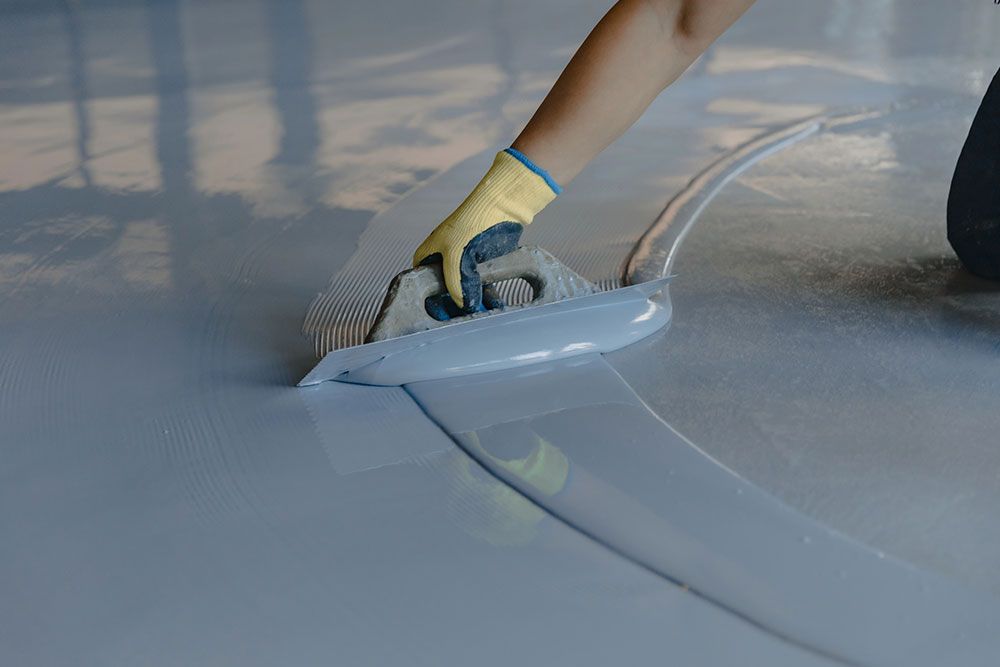
Epoxy flooring involves applying a multi-layer resin system over a concrete substrate. Once cured, the result is a seamless, hard-wearing finish that can be customized with colors, flakes, textures, and non-slip additives. This makes it popular in areas that demand performance, from garages to factories to showrooms.
Aesthetic Flexibility and Finish
If design matters in your decision, the aesthetic differences between the two are worth noting.
Polished concrete delivers a modern, minimalist look. It brings out the natural variations of the concrete slab, offering a raw and industrial vibe. For homeowners and business owners seeking a neutral and reflective surface, polished concrete can serve as a sleek backdrop that pairs well with just about any decor style.
Epoxy floor coatings, on the other hand, offer much more room for creativity. With a range of pigments, metallic effects, and decorative flakes, it’s possible to create a high-gloss showroom floor or a rugged, textured surface that still looks refined. That flexibility makes epoxy a go-to for projects where branding, color matching, or bold visuals matter.
Durability and Strength
Both surfaces are durable, but they perform differently based on the environment and expected use.
Epoxy floors are highly resistant to chemicals, oil spills, abrasions, and impact. This makes them ideal for garages, factories, auto shops, and commercial kitchens. In areas that face frequent equipment traffic or exposure to corrosive substances, epoxy flooring stands up to the challenge with less visible wear.
Polished concrete is also hardwearing, but it doesn’t offer the same level of resistance to chemicals or heavy impacts. It’s more suitable for dry environments or low-traffic areas like retail spaces, offices, or residential basements. While dense and tough, polished concrete can still absorb stains and may require resealing if damaged.
In short, for aggressive environments, epoxy tends to offer more protection. For less demanding conditions, polished concrete holds its own with less surface buildup.
Maintenance and Cleaning
When it comes to cleaning and long-term care, both systems are relatively low maintenance, but the nature of their upkeep differs.
Polished concrete has no topcoat that can peel or delaminate. Once the slab is ground and sealed, maintenance involves routine dust mopping and the occasional damp mop with a neutral cleaner. There’s no risk of yellowing or bubbling over time, and the surface retains its finish without much effort.
Epoxy floors require more attention in the long run. While they’re resistant to spills and grime, the coating itself can wear down with heavy use or improper care. Scratches or peeling might appear if the surface is gouged or exposed to moisture during installation. Recoating may be necessary every few years in high-traffic areas. Still, for spaces where cleanliness and stain resistance are non-negotiable, epoxy’s sealed finish is hard to beat.
Installation Process and Downtime
If timeline and installation complexity are part of your decision-making, it’s important to weigh how each option is installed.
Installing a concrete coating vs. an epoxy system involves more steps and more drying time. Epoxy must be applied in multiple layers, each requiring specific curing times. Temperature and humidity can also impact the process. For large areas or fast-paced timelines, this can extend project completion by several days.
Polished concrete can usually be completed more quickly. After surface prep, the floor is ground and polished in stages. Because no curing is involved, the turnaround time can be faster, especially in open areas without complex layouts. That said, the process does generate dust and noise, which may impact work in surrounding areas.
If time is tight and you’re working with an existing concrete slab in good shape, polished concrete may offer an advantage.
Slip Resistance and Safety
Both polished concrete and epoxy can be made slip-resistant, though one offers more versatility in doing so.
Epoxy floors can be finished with anti-slip additives like quartz sand or aluminum oxide, making them ideal for wet or high-traffic areas. Because epoxy is applied as a liquid, it’s possible to integrate these elements directly into the surface during installation.
Polished concrete can also be treated with sealers that increase traction. However, because of its glossy finish, achieving slip resistance without compromising the shine can be more of a balancing act. In areas like commercial kitchens, loading docks, or pool decks, epoxy tends to offer better results with less tradeoff.
Environmental Impact and Sustainability
For eco-conscious projects, the sustainability angle might also influence your decision.
Polished concrete is generally considered more environmentally friendly. It uses the existing slab, avoids the use of resins or solvents, and requires minimal product application. Its long lifespan and low maintenance also contribute to a lower overall footprint.
Epoxy, in contrast, is manufactured from chemical compounds and may contain volatile organic compounds (VOCs), although low-VOC formulations are widely available today. The tradeoff is performance. For applications where durability outweighs sustainability, epoxy’s added resilience may be worth it.
Cost Considerations
Cost is often the final deciding factor, and both options come with their own price variables.
Polished concrete typically has a lower upfront cost, especially for projects using a basic grind and seal method. However, highly polished or intricately stained finishes can increase the total price. Still, for clients looking to improve existing concrete without significant investment, polishing often wins on affordability.
Epoxy floor coating vs polished concrete systems often carry higher costs, depending on the number of coats, decorative finishes, and prep work required. Yet that higher cost comes with enhanced durability, better protection, and a more controlled aesthetic.
Long-term value matters too. If polished concrete requires fewer repairs over time, it might deliver better ROI in residential or low-traffic areas. But for demanding environments where damage could lead to replacement, epoxy may pay for itself in performance.
Which One Is Right For You?
Choosing between concrete coating and epoxy flooring depends on the space’s function, aesthetic goals, and budget.
If you’re working in an industrial, automotive, or commercial kitchen setting, epoxy provides a highly customizable, durable, and chemical-resistant surface that holds up under pressure. For spaces like showrooms, loft-style homes, or quiet office areas, polished concrete delivers visual impact with easy maintenance and minimal environmental load.
The decision also depends on your expectations for appearance, downtime, and cleaning routines. Both options have their place; it’s simply a matter of matching the material to your priorities.
Why Work With Us
At Elite Floor Solutions, we install a wide range of concrete coatings tailored to the needs of each client. From epoxy and polyaspartic garage floors to quartz and stone pool decks, we focus on combining performance with visual appeal. Our team brings deep experience, fast turnaround, and full customization to every project, all while delivering the highest quality at the best price. If you’re deciding between epoxy and polished concrete, we’re here to help you make the right call for your space.
